Flutter · Dart · One Codebase

One Flutter Build, Two Live Apps

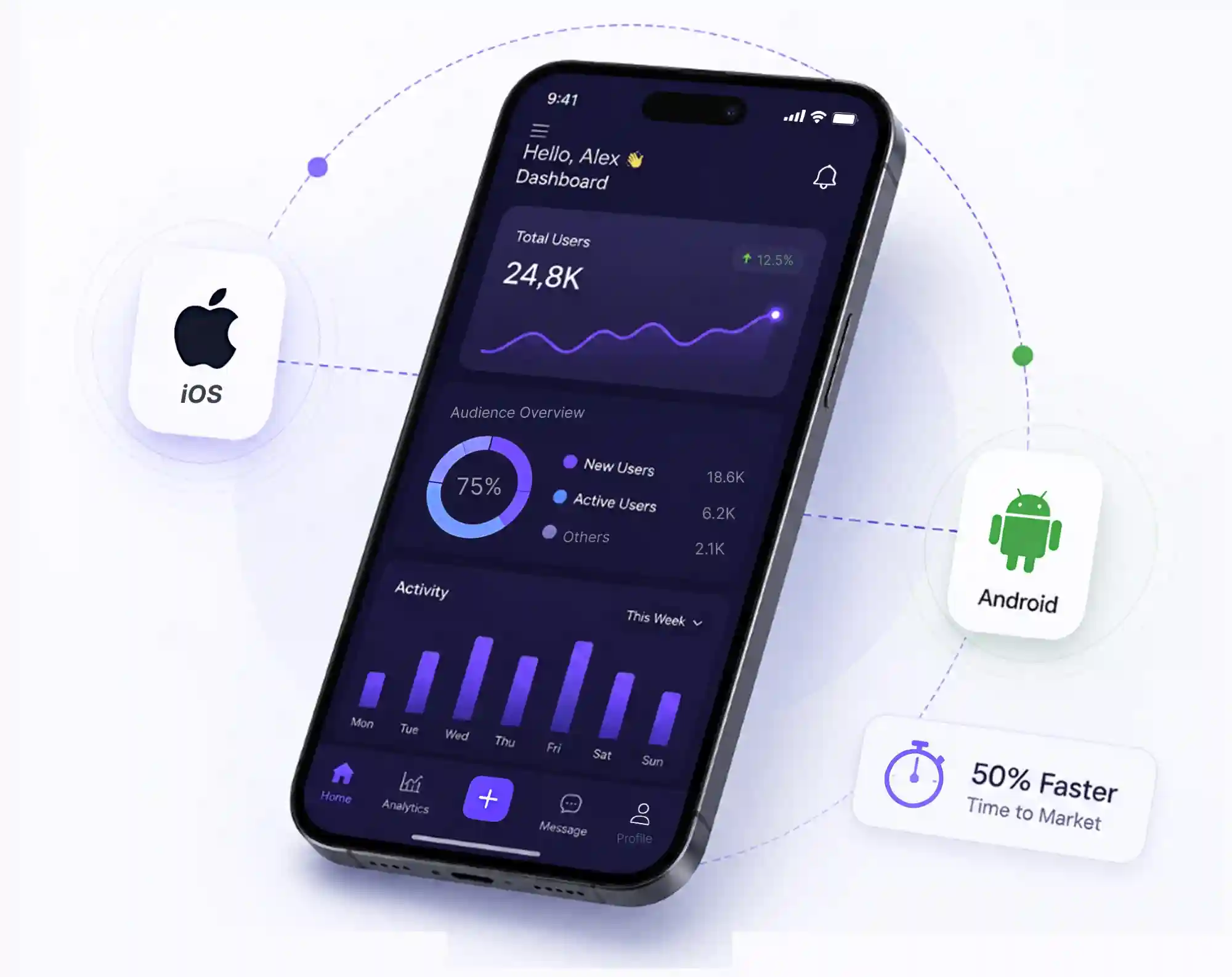
Writing the same app twice is a bill you do not have to pay. We build in Flutter and Dart, so the interface, the business logic, and the design system are written once and shipped to iOS and Android in the same release — with the frame rate of a native app and hot reload while we work.

One Dart Codebase
Both Store Submissions
Native Frame Rate
Flutter 3widget engine
Dart 3sound typing
Impellerdefault renderer
Skiaraster fallback
Material & Cupertinonative feel
Riverpod & Blocstate layer
Platform Channelsnative APIs
Isolatesheavy work off the UI thread
Drift & Isarlocal storage
Firebaseauth, data, push
Fastlanestore automation
Codemagicsigned CI builds
Crashlyticscrash reports
The Arithmetic

What a Single Dart Codebase Actually Buys You

These numbers come from our own Flutter work, not from a brochure. They move depending on how much of your product depends on device features that have no plugin.
90%
of the code is shared between the iOS and Android builds on a typical project
35%
less total effort than scoping, building, and testing the same product twice natively
1s
hot reload turnaround for interface and logic changes while you are still designing
60fps
frame rate we hold on mid-range Android hardware once the widget tree is trimmed
One cross-platform Flutter project running as both an iOS and an Android app
1 project Two signed releases in the same week
How It Works

Write the Product Once, Ship It Twice

Flutter is not two web views wearing a native costume. It is a rendering engine that draws the interface itself, so you get the same layout on an iPhone and on a mid-range Android phone, and both look like the design your team signed off.

  • One Dart project, two platform builds, one set of design tokens
  • A shared widget library instead of two hand-maintained view layers
  • State, networking, and business rules written once and tested once
  • Layouts that adapt to screen size rather than to operating system
  • One bug fix reaches both platforms in the same review cycle
Flutter app running on a phone while the Dart project is edited on a laptop
~1 second Hot reload with state preserved
Why It Builds Faster

Iteration Speed You Can Feel

Most of a mobile project is spent making small changes and checking them. In Flutter that loop is short. Hot reload pushes your Dart changes into the running app in about a second and keeps the current state, so you can move a button, rewrite a label, or change a rule and see the result without losing your place.

  • Hot reload and hot restart for a sub-second feedback loop
  • DevTools for widget inspection, layout debugging, and frame timing
  • Performance overlay to catch dropped frames before testers do
  • One preview shared with stakeholders instead of two device builds
  • Two-week sprints that end on TestFlight and Play internal tracks
What We Build

Flutter Work, End to End

Some of it lives in Dart. Some of it has to be written in Swift and Kotlin for Flutter to reach the hardware. We handle both sides so you are not coordinating two vendors for one product.

01

Flutter App Development

Complete app builds in Dart, from data models and state management through to signed App Store and Play Store releases. Sized for a focused MVP or a product with real traffic behind it.

02

Custom Widgets & Design Systems

When Material and Cupertino do not match the brand, we build your widget library in Dart with theming, every interaction state, and accessibility handled once rather than patched screen by screen.

03

Platform Channels

Swift and Kotlin written by us where pub.dev has no plugin: camera pipelines, Bluetooth LE, NFC, secure storage, background location.

04

Motion & Animation

Shared-element transitions, hero flights, and custom painters driven by AnimationControllers, profiled to hold frame rate on older devices.

05

Offline-First Data

Drift or Isar for local storage, sync queues, and conflict handling so the app stays usable on a train and reconciles when the network returns.

Testing, CI/CD & Ongoing Upgrades

Unit, widget, and integration tests written as the code lands, with real-device QA before release. Pipelines through GitHub Actions or Codemagic turn the same Dart source into signed builds for both stores on every merge. After launch we keep the app current: dependency bumps, new platform SDK versions, and store policy changes handled on a schedule instead of in a panic.

The Process

From Kickoff to Both Stores

Discovery

We list the features, decide which parts belong in Dart and which need platform channels, and agree exactly what ships in version one.

01
1–2 weeks

Architecture

Packages, the state layer, data models, and a reusable widget set get designed and agreed before feature code starts moving.

02
About 1 week

Build Sprints

Two-week sprints that end with a build on TestFlight and Play internal tracks, so you review progress on a real device instead of reading a status report.

03
4–12 weeks

Test & Harden

Widget and integration tests, device QA across screen sizes, frame profiling, and a pass against current store review rules before anything is submitted.

04
1–2 weeks

Ship & Maintain

Signed releases to the App Store and Google Play, staged rollouts, then a maintenance rhythm for SDK versions and plugin updates.

05
Ongoing
Questions

Flutter Development, Answered

Flutter is Google’s UI toolkit for building apps in Dart, and a single project compiles to both iOS and Android. It suits products where the same screens, the same design, and the same features need to reach both stores without waiting on two separate codebases. We lean toward it for consumer apps, internal tools, fast MVPs, and anything with heavy custom interface work.
Native iOS and native Android means two teams, two codebases, and two backlogs, and features tend to land on one platform months after the other. With Flutter, roughly 90 percent of the code is shared Dart, so a feature ships to both stores in the same release. You still reach native APIs through platform channels for the parts that need them, such as payments, Bluetooth, or push.
On the things users actually notice, yes. Flutter compiles ahead of time to native machine code and draws through its own rendering pipeline rather than a web view or a JavaScript bridge, so scrolling and animation hold 60 or 120 frames per second. A few heavy jobs belong in isolates or in native code, and we will tell you up front if your idea leans that way.
On a typical project we design, build, and test the interface once instead of twice, which usually comes out 30 to 40 percent below the two-native-app effort. The saving is smaller on a small app with heavy native requirements and larger on a product with many screens, shared business rules, and an in-house team that would otherwise maintain two repos. You get a fixed quote after discovery, so you can compare it line by line against a native estimate.
Less waiting. Hot reload pushes your Dart changes into a running app in roughly a second, so you can adjust layout, copy, and logic and watch the result immediately without a rebuild. App state is preserved, which means you keep your place while you iterate. It is a development tool rather than a shipping feature, and it only covers code you write in Dart, not changes inside a native plugin.
Yes, and it happens more often than people expect. We normally start with a feature-by-feature plan, keep your live app running, and rebuild one screen group at a time. Your API and backend stay as they are, and the old and new apps can run side by side during the switch. Migration is not always worth it, and if your current native app is small and stable we will tell you that instead of taking the work.
More than most teams expect. Flutter’s widget library covers the standard Material and Cupertino interface, and anything missing we build as a custom widget. Platform channels and plugins reach the camera, Bluetooth, NFC, secure storage, background location, in-app purchases, and local notifications. Where no plugin exists for an API, we write the Swift and Kotlin side ourselves and keep it behind a clean Dart interface.
We write unit and widget tests as we build, run integration tests on real iOS and Android hardware, and check every release build for blockers. Releases go through Codemagic or GitHub Actions so the same Dart source produces signed App Store and Play Store builds every time. We also wire up crash reporting and analytics, and we handle store metadata, privacy declarations, and review submissions on both platforms.

Build Your Flutter App With a Team That Ships

Tell us what you are building. We will come back with a scope, a fixed quote, and an honest read on whether Flutter is the right call for your product.

Start the Conversation

Start Your Project

Smart Digital Solutions for Ambitious Brands.

Partner with our team to build high-performance websites, scalable software, mobile apps, and digital marketing systems that generate leads and support long-term business growth.

Strategy-first consultation aligned with your business goals Tailored solutions across web, app, software, design, and marketing Fast communication, transparent process, and on-time delivery

We use your details only to contact you about your inquiry.